Product overview
Carbonated beverage packaging requires precise control of bottle handling, pressure and closure application. Unlike still liquids, carbonated drinks contain dissolved CO₂ that can escape rapidly if the product experiences uncontrolled pressure changes during filling.
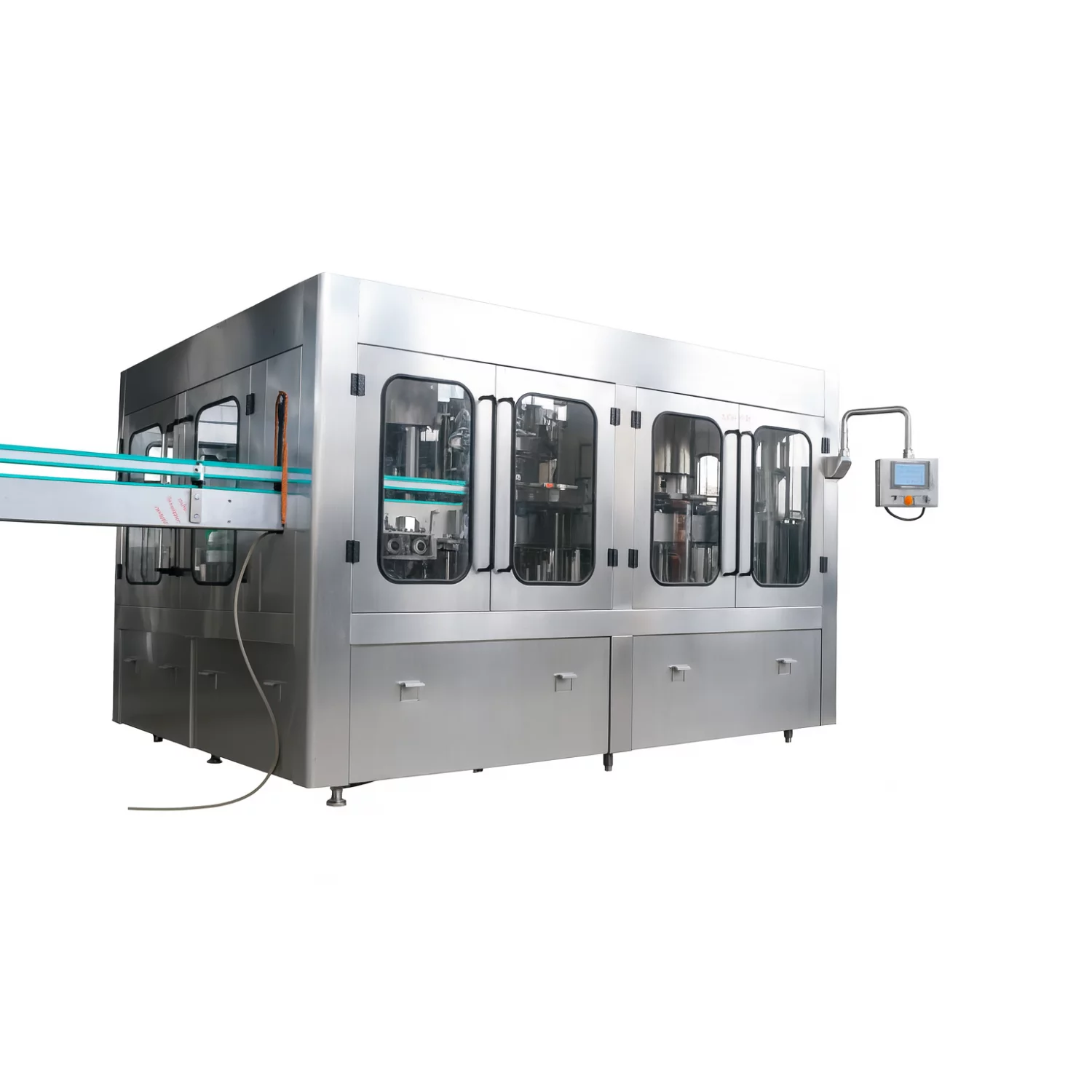
The Automatic Glass Bottle RFC Isobaric Carbonated Beverage Filling Machine is designed specifically for this production requirement.
The system combines Rinsing, Isobaric Counter-Pressure Filling and Capping within one synchronized rotary monoblock for compatible glass bottles from approximately 100 ml to 1000 ml.
Technogen Enterprise is an Automatic Glass Bottle RFC Isobaric Carbonated Beverage Filling Machine Manufacturer and Supplier for Tanzania, providing bottling solutions for Carbonated Soft Drinks, Soda, Beer, Sparkling Beverages, Tonic Water, Energy Drinks and compatible carbonated formulations.
The production cycle begins at the rotary rinsing turret.
Incoming glass bottles are held through neck-handling grippers before being inverted for internal cleaning.
Stainless Steel spray nozzles direct water or compatible rinsing media into the bottle.
After rinsing, bottles are allowed to drain before being returned to their normal transfer position.
The No Bottle–No Rinse function prevents a rinse cycle at an empty bottle position.
A synchronized starwheel transfers the rinsed bottles into the filling turret.
The filling section uses isobaric counter-pressure technology, which is fundamental to controlling a carbonated beverage during filling.
The bottle is raised and sealed against an ULTRA Mechanical 2-Step filling valve.
Air inside the bottle is reduced through pre-evacuation.
CO₂ is then introduced into the bottle until internal pressure approaches the pressure inside the product tank.
Only after this pressure equalization does the beverage begin flowing through the filling tube.
By filling under controlled pressure, unnecessary turbulence and foaming are reduced.
This controlled cycle helps maintain carbonation while achieving repeatable filling conditions.
Once the required liquid level is reached, excess pressure is released gradually through controlled venting and snift action. Pasted text(3)
The filled bottle then transfers to the capping turret.
The machine can be configured with one of two closure systems: Crown Capping or ROPP Aluminium Capping.
Crown capping is suitable for compatible soda, beer and aerated-beverage packaging. Crown sizes of 26 mm and 29 mm are identified.
The ROPP configuration provides an alternative Aluminium closure solution using adjustable knurling rollers.
The closure system is selected according to the actual glass bottle and cap used for the beverage.
Bottle movement between rinsing, filling and capping turrets is controlled through synchronized star wheels.
This integrated monoblock layout reduces the need for independent transfer conveyors between the three principal primary-packaging operations.
The machine is manufactured with a robust Stainless Steel structure and uses SS 304 / SS 316L materials in designated areas.
The filling bowl operates under pressure and the product-contact sections are compatible with appropriate CIP cleaning arrangements.
Machine functions are coordinated through PLC and HMI controls.
The operator can monitor the machine and manage operating functions from the centralized control system.
Protective guarding surrounds the moving sections of the monoblock.
Guard-door interlocks, sensors and emergency-stop controls support safe machine operation.
The machine is available in several head configurations to match different production capacities.
Rinsing and filling configurations include 8, 12, 18, 24 and 32 heads.
Capping configurations include 4, 6, 8 and 10 heads.
Overall output ranges from approximately 2,000 to 9,000 bottles per hour, depending upon the machine configuration and packaging conditions.
CO₂ pressure is specified at approximately 0.2–0.3 MPa, while rinse pressure is approximately 0.4–0.6 MPa.
Electrical supply is 415 V, 3 Phase, 50/60 Hz.
For Tanzania beverage manufacturers, the machine provides an integrated route from empty glass bottle preparation through filling and final closure application.
A brewery may select Crown capping, while a tonic-water or other beverage producer may use ROPP Aluminium closures depending on the selected bottle design.
The equipment should therefore be configured according to actual bottle dimensions, beverage type, closure specification and production-speed requirement.
Applications extend beyond conventional carbonated soft drinks.
Compatible sparkling fruit beverages, tonic water, beer, soda and carbonated energy beverages can all be considered where the filling and packaging requirements match the machine.
The ability to choose between several rinser, filler and capper head combinations allows the system to be scaled according to the required hourly production rather than forcing every manufacturer into one fixed-speed line.
For businesses in Tanzania building new carbonated beverage plants or expanding existing glass-bottle operations, the Automatic Glass Bottle RFC Isobaric Carbonated Beverage Filling Machine provides the three primary processes required before the bottle proceeds to downstream labeling, inspection and secondary packaging
Working principle
- Empty glass bottles enter the rotary rinsing turret.
- Neck-handling grippers hold each bottle securely.
- The container is inverted for internal rinsing.
- Stainless Steel spray nozzles apply the required rinsing medium.
- After the rinse cycle, the bottle is drained and returned to the transfer position.
- The No Bottle–No Rinse control prevents unnecessary rinsing at an empty station.
- A synchronized starwheel transfers the rinsed bottle towards the filling turret.
- The bottle is lifted and sealed against the isobaric filling valve.
- Air inside the bottle is reduced through the pre-evacuation process.
- CO₂ is introduced into the bottle.
- Bottle pressure is brought into balance with the pressurized filling bowl.
- Once pressure equalization is achieved, beverage flows through the filling tube.
- The controlled filling process reduces turbulence and excessive foaming.
- When the required liquid level has been achieved, controlled venting releases excess pressure.
- The filled bottle is transferred to the selected capping turret.
- For Crown applications, the selected Crown closure is applied.
- For ROPP applications, the Aluminium closure is positioned and formed by the ROPP capping system.
- The sealed glass bottle is discharged from the monoblock for compatible downstream processing.
Salient features
- RFC Monoblock : Integrates bottle rinsing, isobaric filling and capping.
- Glass Bottle Handling : Designed for compatible 100–1000 ml glass bottles.
- Counter-Pressure Filling : Maintains controlled pressure during carbonated beverage filling.
- ULTRA Filling Valves : Uses mechanical two-step isobaric filling valves.
- CO₂ Pressurization : Pressurizes bottles before beverage transfer.
- Pre-Evacuation : Reduces bottle air before pressure equalization.
- Pressurized Filling Bowl : Maintains controlled filling conditions.
- Starwheel Transfer : Synchronizes bottles between operating turrets.
- Crown Capping Option : Suitable for compatible Crown-closure applications.
- ROPP Capping Option : Available for compatible Aluminium ROPP closures.
- PLC-HMI Control : Provides centralized automated machine operation.
- CIP-Compatible Filling Area : Supports suitable cleaning of product-contact sections.
- Stainless Steel Construction : Uses SS 304 / SS 316L in designated machine areas.
Safety & interlocks
- No Bottle–No Rinse : Prevents rinsing when no bottle is present.
- Guard Door Interlocks : Protect access to moving machine areas.
- Machine Sensors : Monitor container and machine operating conditions.
- Emergency Stop : Provides immediate machine shutdown when required.
Optional / add-on features
- Missing-Cap Rejection : Automatically rejects bottles identified without the required closure.
- Hot Water Spray : Optional spraying arrangement can be provided at machine discharge.
Applications & industries
The Automatic Glass Bottle RFC Isobaric Carbonated Beverage Filling Machine is designed for beverages requiring controlled pressure during filling.
Carbonated Soft Drinks
Suitable for compatible carbonated soft beverages requiring controlled CO₂ retention and glass-bottle packaging.
Beer
Counter-pressure filling is suitable for compatible beer products packaged in glass bottles. Crown capping can be selected according to bottle requirements.
Soda & Aerated Beverages
The machine can rinse, fill and cap compatible soda and aerated beverages within one automatic monoblock.
Sparkling Fruit Beverages
Compatible sparkling and fruit-flavored carbonated drinks can be processed using the isobaric filling system.
Tonic Water
Suitable for compatible tonic-water applications using Crown or ROPP closures according to the packaging format.
Energy Drinks
Compatible carbonated energy beverages can be filled under controlled pressure.
Contract Bottling
The available configuration range allows contract bottlers to select an appropriate machine according to bottle size, closure and production requirement.
For beverage producers in Tanzania, glass bottles from approximately 100 ml to 1000 ml can be processed within the appropriate machine configuration.
Application items
- Carbonated Soft Drinks : Pressure-controlled filling of compatible soft beverages.
- Beer Bottling : Isobaric filling of compatible beer into glass bottles.
- Soda Bottling : Automatic rinsing, filling and closure application for compatible soda products.
- Sparkling Beverages : Filling of compatible carbonated fruit and sparkling drinks.
- Tonic Water : Suitable for compatible tonic-water glass-bottle applications.
- Energy Drinks : Filling of compatible carbonated energy beverages.
- Contract Bottling : Suitable for compatible glass-bottle carbonated beverage operations.
Technical specifications
| Parameter | Specification |
|---|---|
| Parameter | Specification |
| Bottle Material | Glass |
| Bottle Size Range | 100 ml to 1000 ml |
| Output Capacity | 2,000 – 9,000 bottles/hour |
| Rinsing Heads | 8 / 12 / 18 / 24 / 32 |
| Filling Heads | 8/ 12 / 18 / 24 / 32 |
| Capping Heads | 4/ 6 / 8 / 10 |
| Capping Type | Customer choice: Crown Capping or ROPP Aluminium Capping |
| Filling Technology | Isobaric Counter-Pressure Filling |
| Filling Valve Type | ULTRA Mechanical 2-Step |
| CO₂ Pressure Range | 0.2 – 0.3 MPa |
| Rinse Pressure | 0.4 – 0.6 MPa |
| Construction Material | SS304 / SS316L |
| Electrical Supply | 3-Phase, 415V, 50/60 Hz |
| Automation | PLC + HMI |
| Machine Operation | Fully Automatic |
| Safety Features | Interlocking Guard Doors, Sensors, Emergency Stop |
Automatic Glass Bottle RFC Isobaric Carbonated Beverage Filling Machine for Tanzania production
For manufacturers in Tanzania, Automatic Glass Bottle RFC Isobaric Carbonated Beverage Filling Machine should be evaluated against the actual product, pack format, production schedule and operating environment. Technogen Enterprise manufactures and supplies glass-bottle RFC isobaric filling machines for carbonated beverage producers in Tanzania. The rotary monoblock rinses, counter-pressure fills and caps 100 ml to 1000 ml glass bottles, with crown or ROPP closure configurations. The selected arrangement must suit both routine output and the changeovers expected during normal production.
Operating and product considerations
The dosing method is selected from the product behaviour and required fill range. Viscosity, density, foaming, suspended particles, powder flow or dosage form can influence the hopper, pump, auger, nozzle and container-handling arrangement. Product trials or representative samples reduce uncertainty before configuration.
Planning the complete production line
Tanzanian manufacturers should also define the container infeed, closure process, cleaning expectation and downstream labelling or secondary packaging. Reviewing these interfaces together helps establish a balanced line and prevents one machine from limiting the practical output of the complete process.
Information required for machine selection
- Product viscosity, density, foaming behaviour and suspended particles
- Minimum and maximum fill quantity with acceptable tolerance
- Container material, dimensions, neck opening and target output
Enquiries are supported for projects in Dar es Salaam, Dodoma, Mwanza, Arusha, Morogoro and other Tanzanian industrial locations. The final model, construction, output, documentation and support scope are confirmed in the commercial and technical offer.