Product overview
Driving Excellence in Global Pharmaceutical Manufacturing with State-of-the-Art Liquid Manufacturing Plants from Technogen Enterprise
In the dynamic and highly regulated global pharmaceutical industry, the demand for precision, purity, and efficiency in oral liquid production is paramount. Pharmaceutical manufacturers worldwide seek robust, reliable, and technologically advanced solutions to meet stringent quality standards and optimize their operational workflows. This is where cutting-edge liquid manufacturing plant manufacturers like Technogen Enterprise, based in,,, step in, offering unparalleled expertise and innovative machinery designed specifically for the production of a wide array of oral dose liquids, including syrups, suspensions, solutions, emulsions, and more.
Our commitment is to provide pharmaceutical companies with ideal tools that not only meet but exceed industry expectations. The core philosophy behind our liquid and syrup manufacturing plants is rooted in addressing two critical factors which directly affect the quality and safety of oral liquids: minimizing manual handling and ensuring effective cleanness during manufacturing. By prioritizing these aspects, we empower our clients to achieve superior product quality, reduce contamination risks, and enhance overall operational efficiency.
Salient features
- Uncompromising Quality Assurance: At the heart of pharmaceutical manufacturing lies an unwavering commitment to quality. Our plants are built with this principle in mind, ensuring every component and every process contributes to the integrity and efficacy of the final product. The careful selection of materials, such as SS 316 for all contact parts and SS 304 for non-contact parts, guarantees product purity and corrosion resistance.
- Enhanced Operational Efficiency: Our systems are designed for seamless integration and ease of operation, leading to significant benefits in manpower utilization. Automation, precision engineering, and intuitive controls minimize the need for extensive manual intervention, thereby reducing the potential for human error and increasing throughput.
- Scalability to Meet Demand: Whether you are a burgeoning pharmaceutical startup or a large-scale enterprise, our Liquid Syrup Manufacturing Plants offer flexible capacity ranges from 50 Liters to an impressive 20,000 Liters. This scalability ensures that your investment grows with your business, allowing you to adapt to market demands without compromising on quality or efficiency.
- Adherence to Global Standards: Our equipment is designed and manufactured to comply with rigorous international standards, including ASME SEC VIII DIV 1 for vessel design, and utilizes USFDA-approved food-grade silicone gaskets. This commitment ensures that your production facility will meet the most demanding regulatory requirements globally.
- Advantage: For those searching for a reliable liquid manufacturing plant manufacturer, our solutions are optimized not just for production but also for discoverability. We understand the importance of being found by potential buyers, and our product descriptions and specifications are crafted to be user-friendly, helping us connect with pharmaceutical companies worldwide looking for cutting-edge manufacturing solutions.
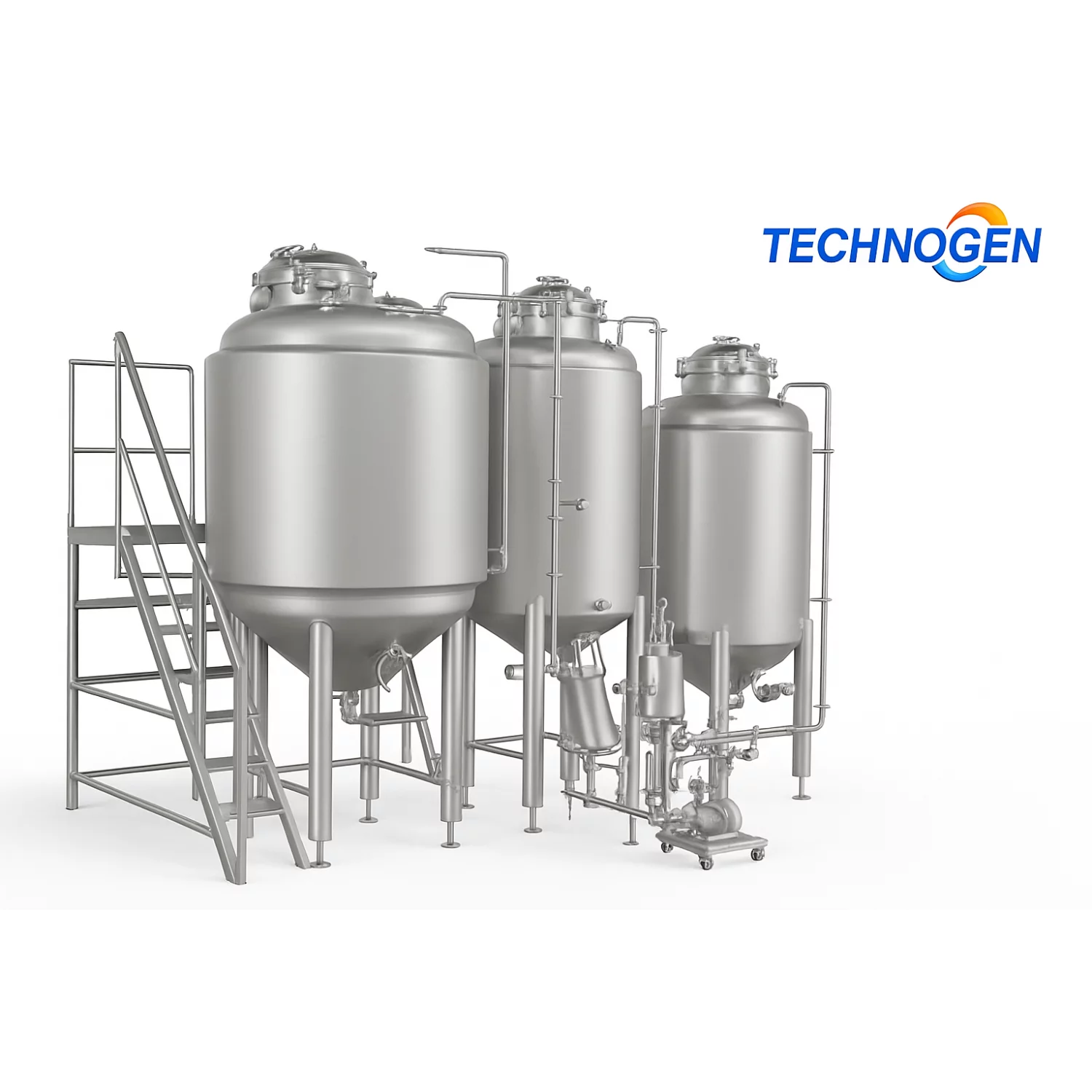
- Syrup Manufacturing Vessel (Jacketed): The centerpiece for primary syrup production.
- Sugar Melting Vessel (Jacketed): Dedicated to the efficient dissolution of sugar.
- Storage Vessel (Non-Jacketed): For holding intermediate or finished products.
- SS Filter Press: Essential for ensuring product clarity and purity.
- Inline Sugar Syrup Filter: For final filtration of the sugar syrup.
- Standard Control Panel: Centralized control for all operations.
- Working Platform: Ensures safe and convenient access for operators.
- Transfer Pump (Lobe Pump): For efficient product transfer.
- SS 304 for Non-Contact Parts and External Cladding: While SS 316 is reserved for contact parts where purity is paramount, SS 304 (a standard 18/8 chromium-nickel austenitic stainless steel) is excellent for non-contact components like vessel jackets, external cladding, support structures, and the control panel housing. SS 304 offers good corrosion resistance, strength, and ease of fabrication. Its use for non-contact parts provides structural integrity and a clean, aesthetically pleasing appeara
- Controlled Heating and Cooling: The jacket allows for the circulation of heating or cooling media (steam, hot water, chilled water) around the main vessel. This precise temperature control is critical for dissolving solids (like sugar), maintaining optimal reaction temperatures for ingredients, preventing degradation of heat-sensitive compounds, and facilitating product stability.
- Faster Processing: Efficient heat transfer through the jacket significantly speeds up dissolution and mixing processes, reducing batch times and increasing overall throughput.
- Uniform Temperature Distribution: The jacket ensures even temperature distribution across the vessel walls, preventing localized overheating or cooling that could compromise product quality or lead to product degradation.
- Automated Cleaning: CIP systems automate the cleaning process using spray balls and predefined cycles of detergents, rinses, and sanitizers, drastically reducing the need for manual cleaning and associated risks of human error or contamination. This ensures consistent and repeatable cleaning validation.
- Enhanced Sterility: SIP systems use steam or other sterilizing agents to sterilize the internal surfaces of the vessels, guaranteeing aseptic conditions for sensitive pharmaceutical products. This is critical for preventing microbial contamination.
- Reduced Manual Handling and Contamination Risk: By automating cleaning and sterilization, the exposure of personnel to potentially hazardous cleaning chemicals is minimized, and the risk of re-contamination from manual intervention is virtually eliminated.
- Increased Efficiency and Throughput: CIP/SIP dramatically reduces turnaround times between batches, as vessels can be cleaned and sterilized without disassembly, leading to higher plant utilization and increased production capacity.
- Efficient Mixing: Bottom-mounted agitators, especially with propeller designs, provide effective mixing throughout the vessel, ensuring homogeneity of ingredients, preventing settling of suspensions, and promoting efficient dissolution. Their position allows for effective mixing even at lower fill volumes.
- Double Cartridge Water-Cooled Mechanical Seals: This is a premium and critical feature. Mechanical seals prevent leakage of the product from the vessel and ingress of contaminants into the product. A "double cartridge" design offers enhanced reliability and ease of maintenance, while "water-cooled" ensures the seal remains at an optimal temperature, extending its lifespan and preventing product degradation due to heat.The "TC vs TC" (Tungsten Carbide vs. Tungsten Carbide) material combination fo
- Minimized Product Loss: The "Zero Hold Up" design of the filter press is engineered to prevent the retention of product within the filter unit after filtration.This maximizes product recovery, leading to higher yields and reduced waste – a significant economic benefit in large-scale production.
- Superior Clarity and Purity: The filter press, with its array of plates and screens, provides a large filtration area (1.18 M²) and is effective in removing particulates, ensuring the final liquid product meets stringent clarity standards. The ability to filter down to 10-15 micron particle size is crucial for quality assurance in oral liquid formulations.
- Hygienic Design: Constructed from SS 316 with a mirror finish for contact parts, the filter press is easy to clean and sanitize, preventing microbial growth and cross-contamination. The use of a lobe pump for transfer also ensures gentle handling of the product during filtration.
- Charging of Raw Materials: Granulated sugar, a primary excipient in many syrups, is accurately weighed using validated scales and charged into the vessel through a dedicated sugar inlet. Simultaneously, precisely measured volumes of high-purity Demineralized (DM) water are added to the vessel. This careful measurement is crucial for maintaining batch consistency and adherence to formulation specifications.
- Controlled Dissolution and Heating: The powerful bottom-mounted propeller agitator is activated, creating a vigorous mixing action that efficiently and rapidly dissolves the sugar. Concurrently, controlled steam or hot water is circulated through the vessel's jacket. This gentle and uniform heating accelerates the dissolution process, ensuring complete solubility of the sugar and preventing crystallization. The temperature is continuously monitored via a high-precision PT 100 sensor, feeding dat
- Initial Filtration and Quality Control: Once the sugar is fully dissolved and a homogeneous syrup is formed, this crude sugar syrup, while appearing clear, may still contain minute particulate matter or trace impurities from the raw sugar. This necessitates an initial purification step. The syrup is then transferred via a hygienic transfer pump to the Inline Sugar Syrup Filter. This specialized filter, equipped with a perforated basket and fine filtration media, effectively captures any undissol
- Transfer of Purified Syrup Base: The meticulously pre-filtered sugar syrup from the Sugar Melting Vessel is transferred into this main manufacturing vessel, establishing the foundation of the oral liquid.
- Precise API and Excipient Addition: Active Pharmaceutical Ingredient(s) (APIs), the core therapeutic components, along with a range of carefully selected excipients – such as preservatives, flavoring agents, coloring agents, viscosity modifiers (thickeners), and buffering salts – are accurately weighed and systematically introduced into the syrup base. This addition is performed through the designated manhole or specific inlet nozzles to ensure controlled incorporation. The order of addition is
- Homogeneous Mixing and Processing: The robust, high-shear, bottom-mounted propeller agitator is engaged. Operating at a precisely controlled RPM (ranging from 500 to 900 RPM, managed by the AC Frequency Drive), it ensures vigorous and thorough mixing. For soluble ingredients, the agitation promotes rapid and complete dissolution. For suspensions, it guarantees a uniform dispersion of solid API particles within the liquid medium, preventing settling and ensuring that each dose delivers a consiste
- Critical Temperature Management: The jacketed design of this vessel is indispensable for critical temperature control during the blending process. Heat might be applied to facilitate the dissolution of certain ingredients or to promote specific chemical reactions. Conversely, cooling might be necessary to protect heat-sensitive active ingredients from degradation or to manage exothermic reactions that could otherwise compromise product stability. Real-time temperature feedback from the PT 100 se
- pH Adjustment and Quality Checkpoints: Throughout this stage, and particularly towards the end, the pH of the solution is rigorously checked using calibrated pH meters. Adjustments are made as necessary using pharmaceutical-grade buffering agents to ensure the optimal pH range for the stability, solubility, and efficacy of the active ingredients. All in-process quality control (IPQC) checks, such as visual inspection for clarity/uniformity, density, and preliminary assay, are performed to confir
- Maximized Product Recovery and Clarity: The innovative "Zero Hold Up" design is a key advantage, engineered to minimize the retention of valuable product within the filter unit after the filtration cycle. This feature significantly maximizes product recovery (yield), reducing waste and enhancing the economic viability of each batch. Furthermore, this final filtration step is paramount for achieving the desired clarity and aesthetic appearance of the oral liquid, which is essential not only for m
- Post-Filtration Transfer to Storage: Following its final purification through the filter press, the now impeccably purified and finished liquid pharmaceutical product is transferred to the Storage Vessel (Non-Jacketed). This vessel is designed to maintain the product's quality and stability until it proceeds to the packaging stage.
- Controlled Holding and Quality Control Sampling: This robust vessel serves as a sterile and sanitary holding tank. The finished product can be safely stored here under controlled environmental conditions (e.g., temperature and light, if applicable, though this vessel is non-jacketed). This dedicated holding period allows ample time for comprehensive final quality control sampling and rigorous laboratory testing to be conducted. These tests confirm that the entire batch strictly adheres to all pr
- Maintenance of Homogeneity: For formulations such as suspensions or certain emulsions, continuous or intermittent agitation via the integrated propeller agitator in the storage vessel is crucial. This ensures that the product remains perfectly homogeneous, preventing any settling of suspended particles or separation of phases, thereby guaranteeing consistent dosage and efficacy for every unit packaged.
- Connecting GI line from Vacuum pump to SS line
- Connecting water connection to vacuum pump assembly
- Connecting Steam and condensate to sugar syrup vessel
- Connecting Steam / condensate and cooling water to manufacturing vessel
- Connecting water line to mechanical seals of all vessels
- Electrical connections of all agitator motors from panel to motors
- Providing bulbs on all vessel light fittings
Safety & interlocks
- SS 316 for Contact Parts: This is a crucial choice. Stainless Steel 316 is an austenitic chromium-nickel stainless steel containing molybdenum, which significantly enhances its corrosion resistance, particularly against pitting and crevice corrosion in chloride-containing environments. In pharmaceutical manufacturing, where various chemicals, acids, and bases are used, SS 316 ensures that the product-contact surfaces remain inert and do not leach impurities into the delicate pharmaceutical formu
- Electronic Water Electro-Sensor (for Sugar Melting and Storage Vessels): This safety feature automatically stops the agitator motor if the cooling water supply to the mechanical seal fails. This proactive measure prevents damage to the expensive mechanical seal and, more importantly, avoids potential product contamination or batch loss due to seal failure.
- Controlled Product Transfer: The fully formulated liquid pharmaceutical product is carefully transferred from the Syrup Manufacturing Vessel to the Zero Hold Up Design S.S. Filter Press. This transfer is facilitated by the hygienic Lobe Pump, which is specifically chosen for its ability to handle viscous pharmaceutical liquids gently without causing shear damage to the product, ensuring its physical and chemical integrity. High-Efficiency Particle Removal: The filter press, equipped with its pre
Optional / add-on features
- Optional: In-Line Homogenizer: For achieving consistent product uniformity.
- Homogenization (Optional, for Enhanced Stability and Bioavailability): For formulations demanding an exceptionally fine dispersion or long-term emulsion stability (e.g., micro-emulsions, challenging suspensions, or high-viscosity products), the In-Line Homogenizer (an optional, yet highly recommended component) is brought into operation. This unit subjects the liquid to intense shear forces by forcing it through a narrow gap at high pressure. This process effectively breaks down solid particles
Technical specifications
| Parameter | Specification |
|---|---|
| Capacity — Gross Capacity | 1200 Ltrs / 1000 Ltrs / 1200 Ltrs |
| Capacity — Working Capacity | 1000 Ltrs / 750 Ltrs / 1000 Ltrs |
| Capacity — Maximum Stirring Volume | 1000 L / 850 L / 1000 L |
| Capacity — Minimum Stirring Volume | 300 L |
| Vessel Design — Vessel Type | Vertical, cylindrical with welded bottom dish & top dish |
| Vessel Design — Vessel MOC (Contact Parts) | SS 316 |
| Vessel Design — Vessel MOC (Non-Contact) | SS 304 |
| Vessel Design — Vessel Shell Dimensions | 1050 mm x 1200 Ht x 4 mm thk (SS 316) / 1000 mm x 1100 Ht x 4 mm thk (SS 316) / 1050 mm x 1200 Ht x 3 mm thk (SS 316) |
| Vessel Design — Top & Bottom Dish Dim. | 1050 mm x 225 Ht x 4 mm thk (SS 316) / 1000 mm x 225 Ht x 4 mm thk (SS 316) / 1050 mm x 235 Ht x 3 mm thk (SS 316) |
| Vessel Design — Design Code | ASME SEC VIII DIV 1 |
| Vessel Design — Vessel Design Pressure | 760mm of Hg to 3 kgs/cm² / 3 kgs/cm² |
| Vessel Design — Vessel Working Pressure | 760mm of Hg to 2 kgs/cm² / 2 kgs/cm² |
| Vessel Design — Vessel Hydro Test Pressure | 4.5 Kg / Cm² / 3.5 Kg / Cm² |
| Vessel Design — CIP / SIP Able | Yes |
| Vessel Design — Support Legs | 4 Nos SS 304, Dia 100 X 4 mm Thk pipe legs |
| Jacket Design — Jacket Working Pressure | 3.5 Kg / 760mm of Hg to 3 kgs/cm² / 3.5 Kg / 760mm of Hg to 3 kgs/cm² |
| Jacket Design — Hydro Test Pressure Jacket | 6 Kg |
| Jacket Design — Jacket Shell Dimensions | 1148 mm x 1050 Ht x 4 mm thk (SS 304) / 1098 mm x 975 Ht x 4 mm thk (SS 304) |
| Jacket Design — Jacket Bottom Dish Dim. | 1148 mm x 245 mm Ht x 4 mm thk (SS 304) / 1098 mm x 235 mm Ht x 4 mm thk (SS 304) |
| Jacket Design — Jacket Design Pressure | 760mm of Hg to 4.5 kgs/cm² |
| Jacket Design — Insulation | 25 mm thk ceramic wool (Asbestos free) |
| Jacket Design — Cladding | 2 mm thk SS 304 |
| Agitator (Propeller) — Mounting | Bottom entry / Bottom mounted / Bottom mounted |
| Agitator (Propeller) — MOC | SS 316 |
| Agitator (Propeller) — Impeller Dia. | 175 dia OD |
| Agitator (Propeller) — Mechanical Seal | Double Cartridge water cooled TC vs TC |
| Agitator (Propeller) — RPM | 500 to 900 RPM |
| Agitator (Propeller) — Stools & Fasteners | SS 304 Flange end |
| Agitator (Propeller) — Motor | 3 HP 960 RPM B5- Non FLP / 5 HP 960 RPM B5- Non FLP / 3 HP 960 RPM B5- Non FLP Remi make |
| Agitator (Propeller) — AC Frequency Drive | Delta USA 3 HP |
| Gaskets — Flange Gasket & TC Gasket | Silicon food grade (USFDA Approved) |
| Surface Finish — Internal (Contact Parts) | 240 Grit |
| Surface Finish — External (Non-Contact) | Satin finish |
| Manhole with Dia 100 sight glass on cover | 400 mm |
| Light glass with SS 304 light assembly (24 volts halogen lamp) | 100 Flg. / 100 Flg / 100 Flg |
| Product Inlet nozzle with Butterfly Valve | 40 TC / 50 TC / 40 TC |
| Product Outlet with Butterfly Valve | 40 TC / 50 TC / 40 TC |
| Sanitary Compound Gauge with Safety Valve (Sanitary) | 40 TC |
| Nozzle for Air Vent with 2 Micron filter with housing | 40 TC |
| Dynamic spray ball (Leckhler Design) for CIP & SIP | 40 TC |
| Vacuum Nozzle with Butterfly Valve | 40 TC |
| Spare nozzle with Butterfly Valve | 40 TC / 50 TC / 40 TC |
| Sugar Inlet with Butterfly Valve | 75 TC |
| Thermowel for PT 100 Sensor from Bottom | 15 TC |
| Steam inlet / cooling water outlet (Manifold) | 40 |
| Condensate outlet / Cooling water inlet (Manifold) | 40 |
| Safety release valve & pressure gauge / Jacket Vent (Manifold) | 40 |
| Jacket drain with Blind | 40 |
| Agitator (Propeller) — M. Seal Protection | Electronic water electro-sensor if water stops, propeller stops. |
| No. of Plates & thk. | 12 nos. of 1.6mm thk. |
| No. of Screens & thk. | 16 nos. of 1.6mm thk. |
| Filtration Area | 1.18 M² |
| Cake Holding Capacity | 37.75 Ltrs. |
| Output (Ltrs / Hr.) | 1900 Ltr. / Hr. (Depends on Viscosity, pH, nature of Solid, Contents of liquid) |
| Filter Media Micron | 10 - 15 micron |
| Shell Thickness | 2 mm thk. |
| Top Cover Thickness | 2 mm thk. Dish end |
| Bottom Thickness | 2 mm thk. Dish end |
| Process Inlet | 1" OD T.C. Fitting |
| Process Outlet | 1" OD T.C. Fitting |
| Pump | 1 Lobe Pump coupled to 2 HP 900 RPM Hindustan Make Motor |
| Pump Mechanical Seal | TC v/s TC Seal |
| Pump & Filter Gasket | Silicon (Food Grade) |
| Pump Head | 30 Mtrs. |
| Pump Pressure | 3.0 Kg / cm² |
| Pressure Gauge | 3/8 BSP (0 to 7 Kgs. Range) |
| Air Vent Valve | 3/8 BSP |
| Safety Valve | 3/8 BSP |
| Drain Valve | BSP |
| Sampling Valve | BSP |
| Trolley | SS 304 with 4 nos. Fibre Castor wheels |
| Contact Parts Finish | SS 316 finished to Class 4B (Mirror) finish / SS 316 finished to Class 4B (Mirror) / SS 316 internally 240 Grit |
| Other Components Finish | SS 304 finished to Class 2B (Satin) finish / Class 2B (Satin) finish |
| Gross Capacity | 100 litres |
| Shell Dimensions | 700 mm Vacuum |
| Vessel Type | Vertical cylindrical with welded bottom dish and flanged top dish |
| Internal Components | Perforated basket |
| Top Dish Nozzle | 40 mm inlet with full cone distributor |
| Bottom Dish Nozzle | 40 mm outlet |
| Flange Seals | Silicon D-ring seals |
| Support Legs | 4 nos. SS 304 legs with castor wheels |
| Top Flange Height | 900 mm |
| Box MOC | SS304 sheet |
| VFD | RYB Control Panel with VFD for 3 hp - 4 nos. (Sugar melting Tank, Syrup Manufacturing Tank and 2 Storage Tanks) |
| Other Motors | 7.5 hp HSE ON-OFF |
| Safety Feature | Emergency Stop |
| Optional Features — PLC | PLC with 5 Multicolour HMI Touch screen Panel Make Delta |
| Optional Features — Load Cell | 1 nos for Manufacturing Vessel |
| Dimensions | 7000L mm x 900 mm wide x 1500 mm heights |
| Material | Complete with SS dimpled plate and SS 304 railing |
| Access | 900 mm wide steps on one side |
| Mounting | Mounted on stand |
| Motor | Geared 1.5 HP / 760 RPM / 440v / TEFC motor / 7.5 HP 2800 RPM B5- Non FLP |
| Starter | Yes |
| Inlet Size | 40 mm TC Union |
| Outlet Size | 40 mm TC Union |
| MOC | SS 316 |
| Impeller Type | Stator / Rotor |
| Mechanical Seal | Double Cartridge water cooled TC vs TC |
| RPM | 2800 RPM |
| Stools & Fasteners | SS 304 Flange end |
| M. Seal Protection | Electronic water electro-sensor if water stops, Impeller stops. |
| Non-Contact Parts Finish | SS 304 externally Satin finish |
Liquid & Syrup Manufacturing Plants for Tanzania production
For manufacturers in Tanzania, Liquid & Syrup Manufacturing Plants should be evaluated against the actual product, pack format, production schedule and operating environment. Driving Excellence in Global Pharmaceutical Manufacturing with State-of-the-Art Liquid Manufacturing Plants from Technogen Enterprise The selected arrangement must suit both routine output and the changeovers expected during normal production.
Operating and product considerations
The machine is configured from representative samples, dimensioned drawings and the required handling sequence. This confirms the guides, tooling, contact parts, controls and operator access needed for stable production with the intended product or container.
Planning the complete production line
For a Tanzania installation, the proposal should consider available space, utilities, conveyor interfaces, changeover needs, cleaning access and the roles of adjacent equipment. These details determine whether a standalone machine or a connected line arrangement is more appropriate.
Information required for machine selection
- Actual product and packaging samples or drawings
- Required output and operating schedule
- Available electrical, compressed-air, water or steam utilities
Enquiries are supported for projects in Dar es Salaam, Dodoma, Mwanza, Arusha, Morogoro and other Tanzanian industrial locations. The final model, construction, output, documentation and support scope are confirmed in the commercial and technical offer.